Appliance Repair American · Repair guidance
The Best Way to Clean a Dryer Vent Starts With the Right Scope
Understand lint-screen care, exhaust-duct cleaning and dryer access limits so you can arrange the right work without overlooking a blocked vent.
Originally published · Updated
Cleaning the lint screen and clearing the entire exhaust duct are different jobs. Match the work to the dryer and the actual vent route.
Find out which air path your dryer uses
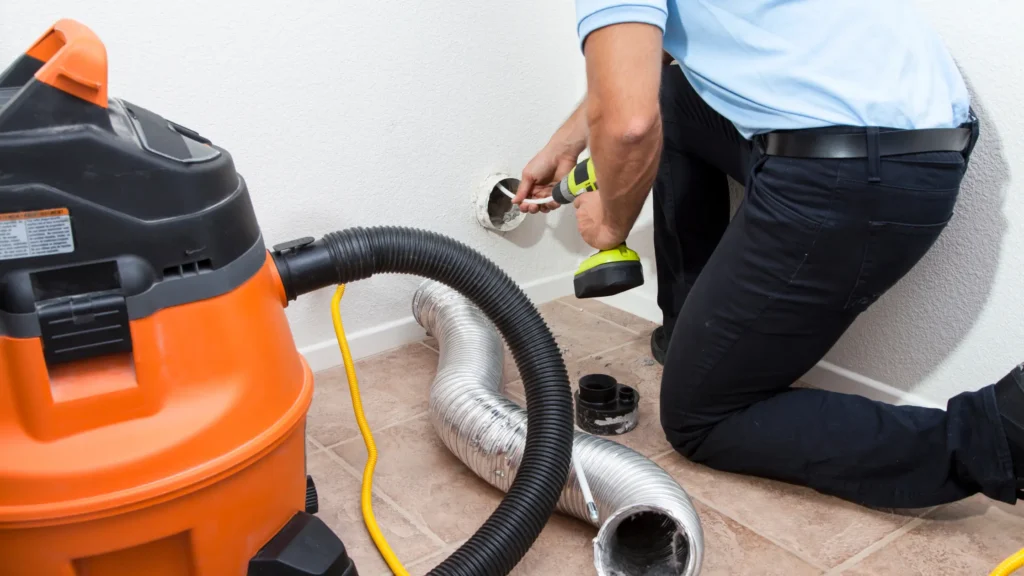
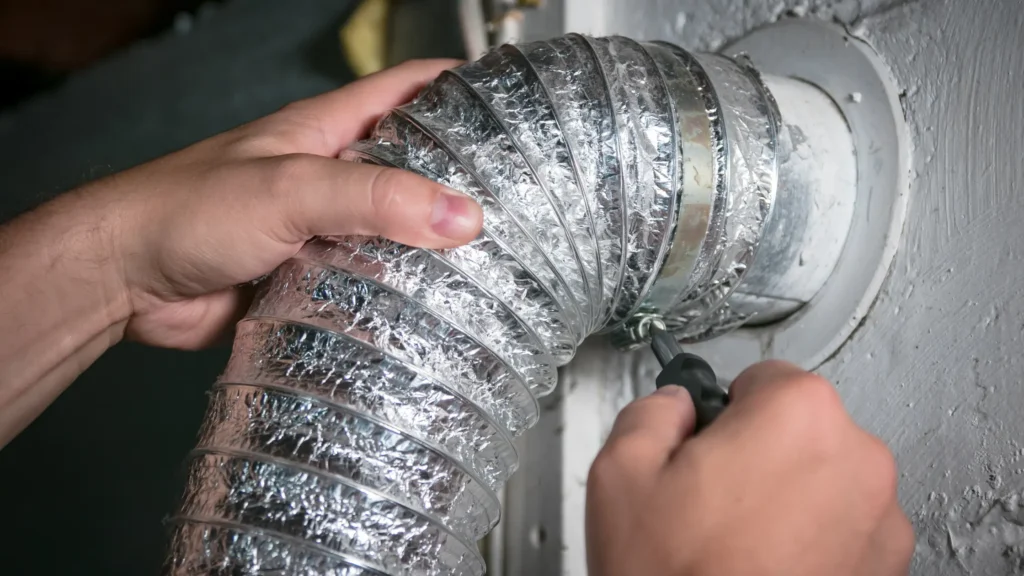
A conventional vented dryer sends exhaust through a duct to an outdoor termination. The removable lint screen catches some lint before that air leaves the appliance, but cleaning the screen does not clear an obstructed duct.
Identify the appliance model and, where accessible without moving equipment, the vent route and outdoor outlet. Long concealed runs, roof outlets, stacked equipment and gas connections change the access requirements. A cleaning kit is not proof that a particular installation is suitable for DIY work.
Ventless dryers use a different moisture-handling arrangement and have model-specific filter or condenser care. Do not search for an outdoor exhaust or disconnect parts solely because a general dryer article describes them.
Keep ordinary lint-screen care separate from duct work
Follow the owner guide for removing lint from the normal user-accessible screen and for any washing/drying instructions. The U.S. Fire Administration recommends cleaning the lint filter before and after each cycle and not operating a dryer without it.
Do not reach down an internal opening with a tool, remove cabinet panels or move a heavy appliance to make a routine cleaning step possible. If the screen is damaged, fits poorly or has material beyond normal reach, arrange appropriate service.
A useful duct-cleaning plan covers more than the opening
For exhaust cleaning, establish who can safely access the dryer connection, the duct run and its termination. The method must suit the material, length, bends and condition of that installation. Avoid a generic instruction to push a brush or leaf blower into an unknown route.
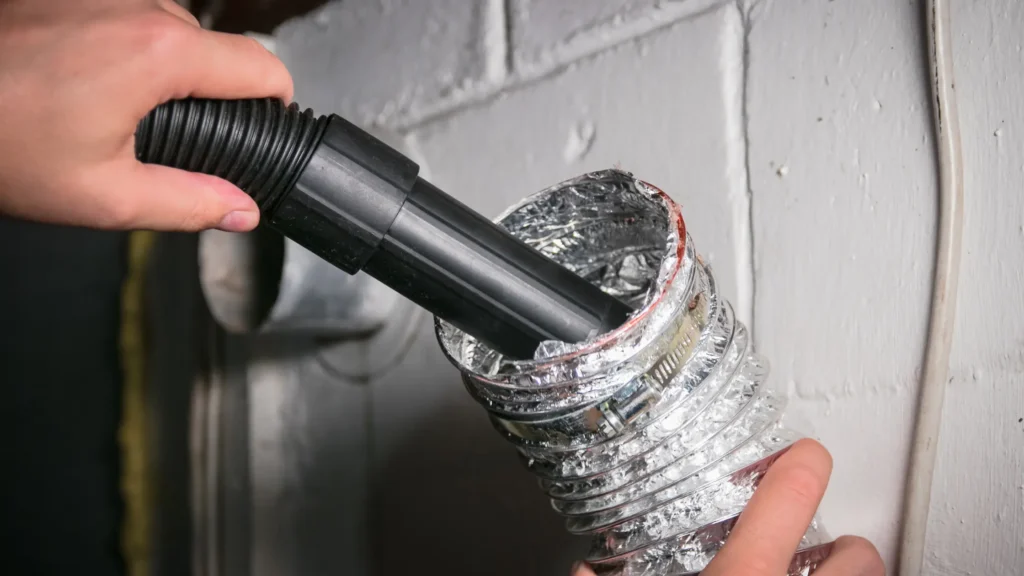
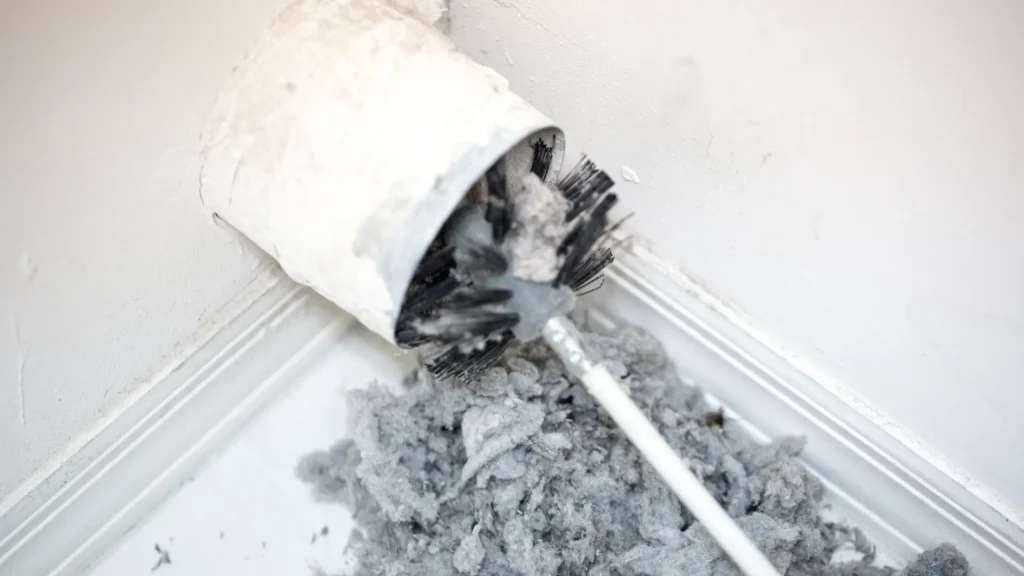
Ask the provider how they will address the full path, check for disconnected or damaged sections, remove loosened debris and assess the outlet. A handful of lint removed near the dryer does not establish that a concealed restriction farther away has been cleared.
Birds or nesting material require a separate response before ordinary duct cleaning; see birds in a dryer vent. Smoke or a suspected fire requires leaving and calling emergency services from safety, not cleaning while the problem is active.
Check the connection and outdoor termination too
A crushed connection, damaged duct or restricted outdoor covering can remain a problem after loose lint has been removed. USFA advises checking for damaged or restricted venting and making sure the outdoor covering opens during normal operation. Do not start a dryer with a known obstruction to perform that check.
Reconnection must follow the installation instructions for the dryer and approved duct components. Do not loosen gas fittings, improvise a transition duct, remove an inaccessible exterior cover or climb to a roof as part of a general cleaning checklist.
Before the dryer returns to use, have the person completing the work explain what was cleaned, what damage or restrictions were found, and whether any further correction is needed. Do not use a short run to blow remaining debris through an unchecked system.
A ventless dryer needs its own maintenance routine
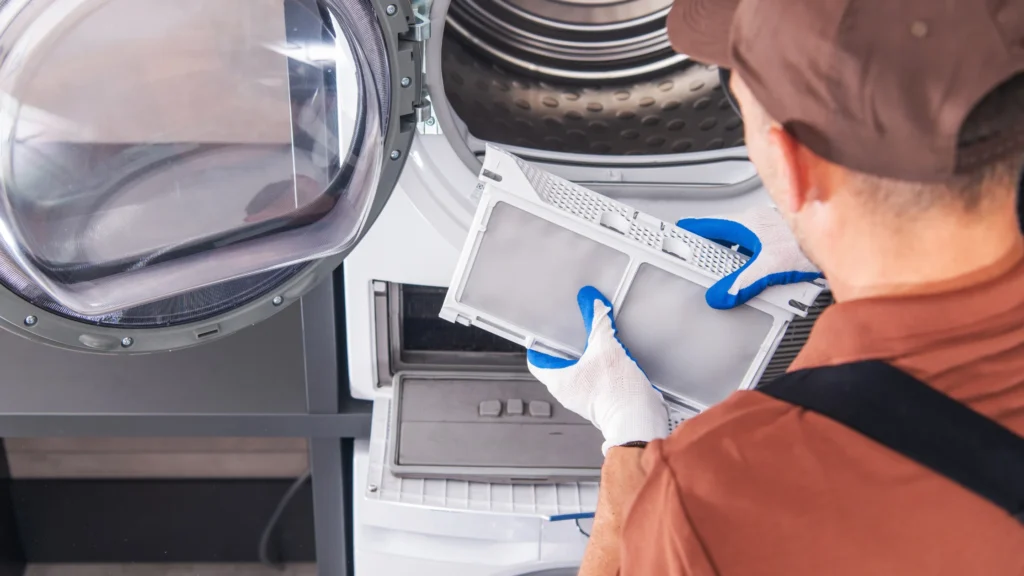
The photographs below show a dryer filter and its lower service area. That is a different view from the external exhaust duct pictured above. Follow the exact machine’s instructions for filters, water collection and any user-serviceable condenser area.
Do not assume every lower panel can be opened for owner cleaning or that every filter should be washed or sprayed. If normal care cannot be completed as described in the manual, ask for help rather than taking the appliance apart.

Set a maintenance plan around actual use and condition
Use the model’s maintenance schedule and the findings from the actual installation. Household use and the duct arrangement affect the work needed; a universal annual appointment is not a substitute for investigating changed drying time, restricted airflow or damage.
Keep the appliance and vent-work notes together. If performance remains poor after the exhaust has been assessed, provide those findings, the dryer model and the cycle symptoms when requesting dryer repair.
Appliance Repair American provides household appliance repair in our listed Florida service areas. For a dryer fault, describe the symptoms and any recent vent work when booking. For exhaust-duct cleaning or nesting birds, contact a provider qualified for that work.
Appliance Repair American no longer offers dryer vent cleaning. Arrange exhaust-duct cleaning with a provider who offers that service; contact us for an appliance repair concern.
A little clarity
Frequently asked questions
Does cleaning the lint screen clean the dryer vent?
No. The lint screen and the exhaust duct are different parts of the air path. A restriction in the duct or termination can remain after the screen is clean.
Can I use a leaf blower instead of a duct-cleaning service?
Do not assume that blowing into an unknown duct clears it safely or completely. The vent route, condition, access and presence of wildlife need assessment before selecting a method.
How often should a dryer vent be cleaned?
Use the appliance instructions and the actual installation’s condition and use to set a schedule. Investigate changed performance or suspected obstruction promptly rather than waiting for a calendar date.
References and model instructions
Use the instructions for your exact appliance. Manufacturer examples do not diagnose every model.