Appliance Repair American · Repair guidance
Why Won’t My Dryer Start?
Separate a dryer with no power from one that lights up, clicks or hums without turning. Check the settings safely and know what to report for repair.
Originally published · Updated
Start with what the dryer does when you select a cycle: no response, lights without movement, a hum, or a cycle that stops. Those observations lead to different checks.
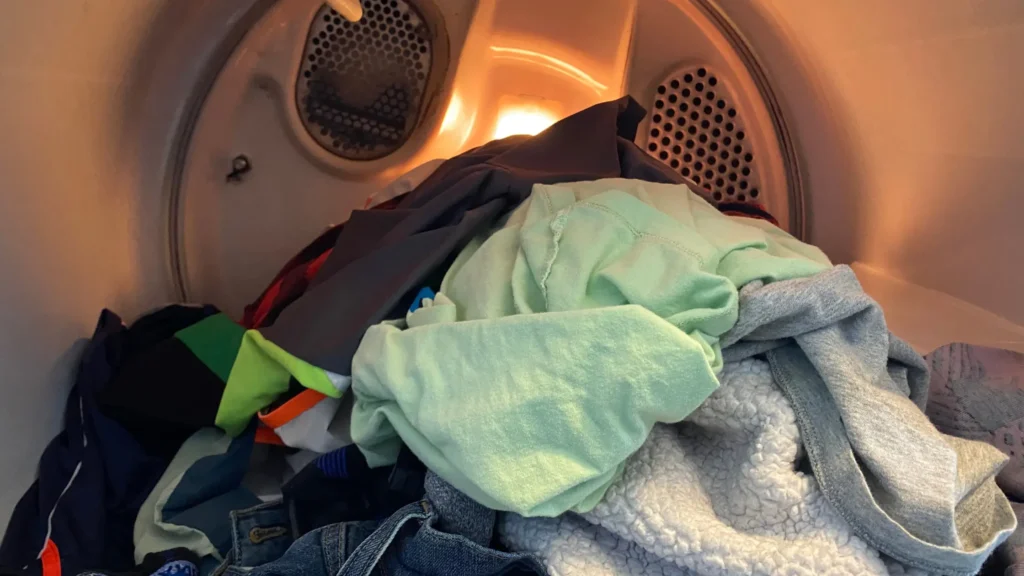
Which description fits your dryer?
A dark display, a working drum light and a motor sound are three different observations. Before buying a switch, fuse or control board, note exactly what happens when you use the normal controls. Record any displayed message with its punctuation and the full model number.
Use no power or light if the controls never respond; power but no start if the panel responds without a cycle; humming without drum movement if you hear a motor-like sound; or stopping mid-cycle if it starts and then quits.
If there is smoke, scorching, a damaged electrical connection, gas odor or a hot but stationary drum, stop. Do not keep trying Start to collect more evidence. For smoke or suspected fire, leave and call emergency services from safety. With suspected leaking gas, leave without operating switches or plugs and call 911 and your gas supplier from safety.
No power, no display or no drum light
Check whether the rest of the home has power and whether an outage preceded the problem. A working washer beside the dryer does not establish that the dryer’s separate circuit is working. See our dryer after a power outage guide for that specific sequence.
Look at an already accessible plug or breaker only if there is no damage, heat, moisture or burning smell. Do not move stacked equipment, pull an appliance by its cord, open a terminal cover or test a high-voltage outlet. A recurring trip or damaged connection needs qualified assessment rather than repeated resets.
A failed drum lamp is not, by itself, proof that the entire dryer has lost power. Some models do not have a lamp; others can have a separate lamp problem. Record whether the display, sounds and normal controls also stopped working. GE’s startup guidance includes supply, door, cycle selection and Start-button checks, rather than treating one dark lamp as a diagnosis.
The controls work, but the cycle does not begin
Remove clothing caught in the door opening and close the door normally. A bent latch, damaged strike or door that will not stay closed needs service; do not slam it, hold a switch down or bypass the safety mechanism. Hearing a click does not prove the switch’s electrical function.
Check the displayed control-lock, delay or pause status against the exact owner guide. Select a drying cycle and use the Start button as the model directs; a brief tap is not sufficient on every dryer. Whirlpool specifically identifies control lock, incomplete latching and insufficient Start-button hold time as possible causes. There is no single unlock combination for every brand.
If these ordinary checks do not restore operation, report whether a relay clicks, the display changes or an error returns. A lit panel does not prove that the motor circuit, door input or complete power supply is sound. Replacing the main board solely because the dryer has lights can miss the actual fault.
The dryer hums, but the drum does not move
Stop the attempt if the drum remains still. Avoid repeated starts or reaching inside to push the drum while operating a switch. A sound described as humming does not confirm that the motor is rotating normally.
A loose or broken belt can interrupt drum movement, but a drive-system restriction, motor problem or model-specific safety circuit can produce overlapping symptoms. GE and Whirlpool both identify the belt as one possible cause when the drum does not turn. A hand-spinning test alone cannot certify that the belt and motor are good.
Tell the technician whether the sound begins immediately, whether movement stopped during a load and whether the machine was unusually full. Do not add oil to rollers or buy a capacitor based on a general article; support parts, lubrication requirements and motor designs differ by model.
It started, then suddenly stopped
Record the cycle, approximate time before stopping and whether the display stayed on. Also note a door message, a power interruption, an unusual sound or excessive heat you had already observed. Keep any error photo taken before a reset.
A door interruption, supply fault, drive problem or protective device can all require different follow-up. If the dryer runs only after cooling, that pattern is useful to report; it is not permission to keep repeating hot shutdowns. Leave it off if it overheats or trips again.
The thermal fuse is one possible item in a technician’s diagnosis, not a universal explanation for every dead dryer. The effect depends on the model and the protective device involved. If a protective device has opened, the underlying problem must be investigated; bypassing it or repeatedly replacing it does not correct that cause.
The drum turns, but the clothes are not drying
That is a different symptom from failure to start. Check whether the chosen cycle uses heat and note whether the clothes are cold, warm and wet, or only partly dry. An air-only setting and a failed heating system should not be treated as the same diagnosis.
GE explains that some conventional electric dryers can run on part of their electrical supply while lacking the supply required for heat. Gas dryers also need electrical power for controls and movement; a gas-heating problem is not automatically a no-start fault. Do not open gas fittings or electrical panels to investigate.
Use the dryer heating guidance and describe both drum movement and heat when booking. For slow drying or airflow concerns, separate normal filter care from the entire exhaust path.
What needs to be tested before parts are ordered?
Appliance Repair American’s dryer service covers startup, drive, control and heating faults. Give us the model and observed sequence so the repair request begins with the symptom rather than a guessed replacement part.
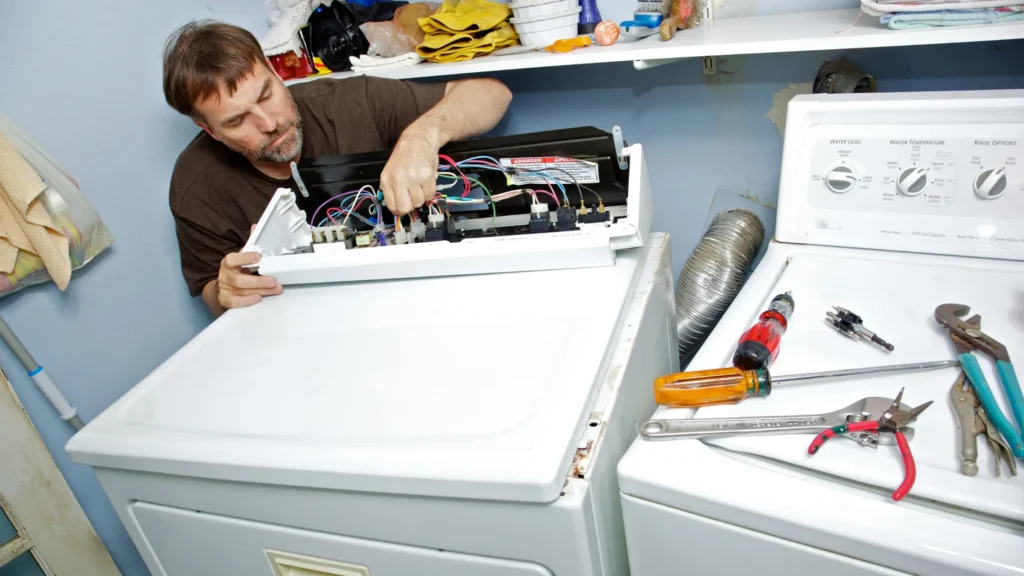
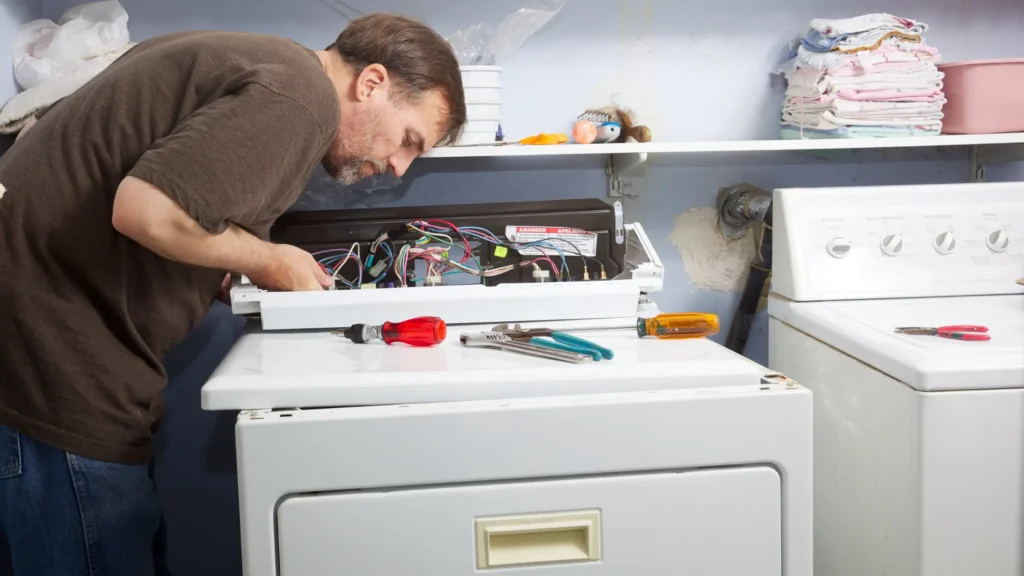
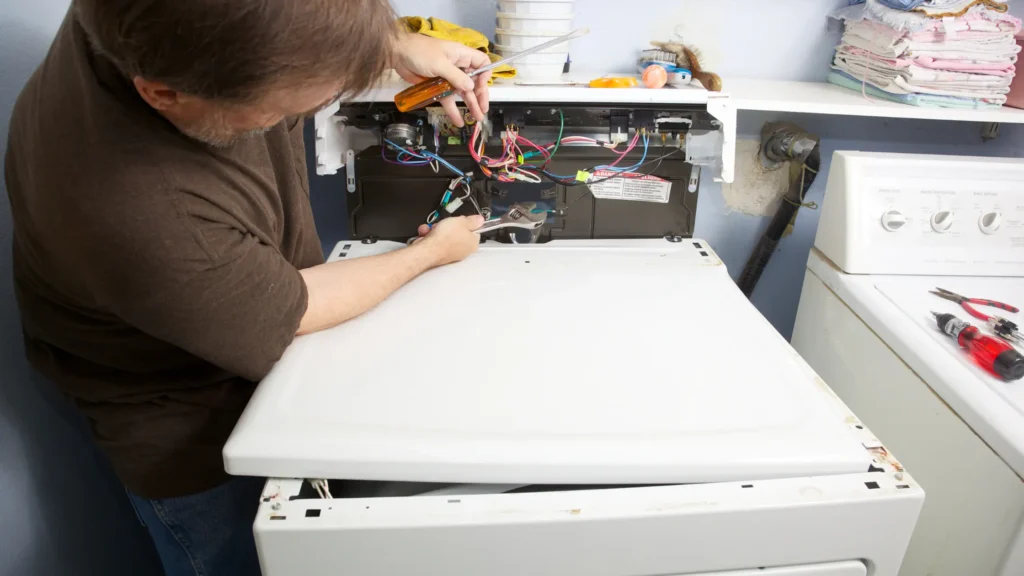
Depending on that model, diagnosis may involve the incoming supply, latch and door circuit, start control, belt and tensioning system, motor, protective devices or control outputs. Terminal blocks and wiring also need the correct electrical checks. These are qualified service tasks; a photograph of a similar dryer is not a wiring guide.
Ask what was found, what caused the failure and whether an airflow or installation problem also needs correction. Compare the complete estimate, condition and previous repairs with an installed replacement. The dryer service page includes a repair-versus-replace comparison tool; age alone does not settle that decision.
Useful maintenance and appointment details
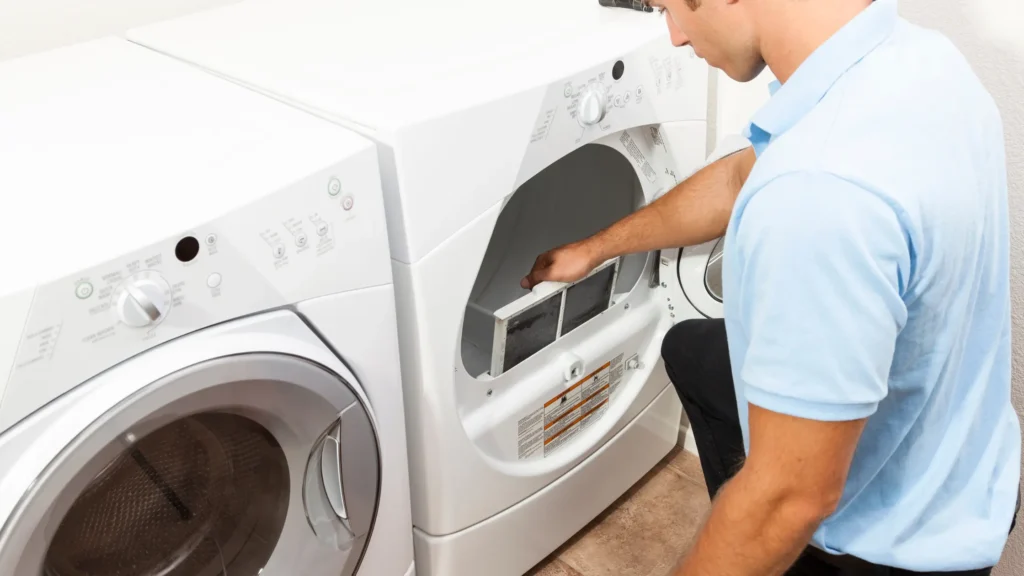
Keep up with the lint-screen and ventless-filter care specified for your model. Do not turn ordinary maintenance into a routine of opening the cabinet to inspect belts, bearings or wiring. Exhaust access and concealed restrictions may need a separate qualified provider.
For service, provide the brand and model, whether the dryer is gas or electric, the exact lights or sounds, the last successful load and any outage or recent installation. Mention stacked or tight access before the visit. Online booking is available 24/7; choose an available appointment in the scheduler.
A little clarity
Frequently asked questions
Why does my dryer have power but not start?
A lit control does not prove the door input, motor circuit and complete supply are functioning. Check normal door closure, control lock and cycle/start instructions. A continuing fault needs diagnosis.
Where is the reset button?
Reset and restart procedures differ by model. Use the owner guide; a power reset does not repair damaged wiring or restore a failed protective device.
Does humming prove the belt is broken?
No. A belt problem is one possibility, but a hum without movement can have other drive or electrical causes. Stop repeated attempts and report the sound and lack of movement.
Can a blown thermal fuse be reset?
A one-time thermal fuse is replaced after diagnosis rather than reset. Other protective devices have different designs. Never bypass protection, and address the cause before returning the dryer to use.
References and model instructions
Use the instructions for your exact appliance. Manufacturer examples do not diagnose every model.